
The Great Denver Housing Reset: Navigating the 2026 Market Stabilization and the "Winter Window" Opportunity
For the past several years, the Denver metropolitan area’s real estate market has felt like a high-altitude roller coaster. From the white-hot, pandemic-era bidding wars in neighborhoods like Washington Park and the Highlands, to the sudden freeze brought on by the Federal Reserve’s aggressive interest rate hikes, both buyers and sellers have been left asking one fundamental question: "Is the Denver housing market finally returning to normal?"
The short answer is yes—but "normal" in 2026 does not mean a return to the status quo of 2019, nor does it mean the return of 3% mortgage rates. According to the highly anticipated 2026 Colorado Housing Market Outlook released by the predictive analytics team at TimeToSell.AI, the Mile High City is entering a phase of mature stabilization. This new era will reward strategic, data-driven decision-making over the emotional frenzy of years past.
As an advisor working with clients navigating this transition, I have dissected the predictive data to understand what this macro-shift means for your equity, your purchasing power, and your moving timeline along the Front Range.
---The Mortgage Rate Plateau: Why the Mid-6% Range is the New Baseline
The most significant revelation in the TimeToSell.AI forecast is the projected stabilization of the 30-year fixed mortgage rate in the mid-6% range (specifically between 6.3% and 6.7%).
For buyers holding out hope for a return to the 3% or 4% rates of the early 2020s, the macroeconomic reality is clear: those rates were historical anomalies, not the standard. However, the stabilization of rates in the mid-6s is actually incredibly positive news for the Denver market for several reasons:
- The Death of Rate Volatility: In 2023 and 2024, rates swung wildly from week to week, making it impossible for buyers to accurately budget. A predictable rate environment allows buyers to calculate their purchasing power with confidence.
- Thawing the "Lock-In" Effect: Millions of Denver homeowners have been "locked" into ultra-low interest rates, refusing to sell because they didn't want to trade a 3% mortgage for an 8% mortgage. At 6.5%, the gap narrows. Homeowners facing major life changes—marriages, expanding families, divorces, or retirements—are finally deciding that lifestyle needs outweigh interest rate preservation.
- Resilient Home Values: Because demand in Denver remains fundamentally strong—driven by a robust local economy, tech sector presence, and unparalleled lifestyle appeal—stabilizing rates will prevent a downward spiral in home values. Instead, expect a healthy, sustainable annual appreciation rate of 3% to 5% across the metro area.
The Math of the Mid-6% Rate in Denver
To put this into perspective, let's look at the numbers. The median sales price for a single-family home in the Denver metro area currently hovers around $600,000.
With a 20% down payment ($120,000) and a 30-year fixed loan of $480,000 at a stabilized 6.5% interest rate, the principal and interest payment is approximately $3,034 per month. While this is higher than the payments of five years ago, it represents a stable, predictable cost of entry into one of the country's most desirable real estate markets.
---The "Winter Window" vs. The Spring Rush: Rethinking Your Listing Strategy
One of the most actionable insights from the TimeToSell.AI outlook challenges traditional real estate wisdom: Do not wait until the spring of 2026 to list your home.
Historically, Denver sellers have waited for the snow to melt and the tulips to bloom in April and May before putting their homes on the market. However, 2026 will see a normalization of inventory. As more sellers accept the new rate environment, a wave of new listings is projected to hit the market in the spring. This means that if you list in May, your home will face maximum competition.
Why the "Winter Window" is Your Secret Weapon
In Colorado, the spring real estate market actually begins in the dead of winter. Serious buyers—often driven by corporate relocations, tax planning, or lease expirations—are actively searching online immediately after the winter holidays.
By listing your property during the "Winter Window" (typically mid-January through late February), you position your home to capture this high-intent buyer pool when inventory is at its absolute lowest.
Consider the competitive advantages of the Winter Window:
- Maximum Visibility: With fewer active listings on the market, your home stands out as a premier option in search algorithms and buyer feeds.
- Serious Buyer Pool: Winter buyers are not "looky-loos." They are highly motivated, pre-approved buyers who are ready to write competitive offers.
- Stronger Leverage: When inventory is low, sellers retain more control over terms, including post-occupancy agreements (rent-backs), which are highly valuable if you need time to find your next home.
The Micro-Market Divergence: Where You Live Matters Most
While macro-forecasts provide an excellent high-level view, Denver is not a monolith. The 2026 outlook highlights a distinct divergence between different micro-markets across the Front Range. Understanding where your neighborhood fits into this spectrum is critical for timing your next move.
1. High-Demand Urban Core (Cherry Creek, Wash Park, Park Hill)
These established, highly walkable neighborhoods remain incredibly resilient. Inventory here will likely remain tight throughout 2026. Sellers in these areas can expect premium pricing, while buyers must be prepared to act quickly and present highly clean, competitive offers.
2. The Suburban Strongholds (Douglas County, Littleton, Lakewood)
Suburbs with top-tier school districts are seeing a steady influx of growing families. These markets will experience a more pronounced "Spring Rush." If you are selling a suburban family home, utilizing the Winter Window is highly recommended to beat the wave of comparable listings.
3. First-Time Buyer Hotspots (Green Valley Ranch, Aurora, Thornton)
Because first-time buyers are the most sensitive to interest rate fluctuations, these areas will see immediate activity as rates stabilize in the mid-6% range. This is where the pent-up demand of the last three years will unleash, making it a highly active segment of the market in 2026.
---The 2026 Strategic Playbook
To succeed in this stabilized market, both buyers and sellers must adjust their playbooks. The strategies that worked in 2021 are obsolete, and the fear-based hesitation of 2023 is no longer justified.
For Sellers:
- Price to the Current Market, Not Past Peak: Buyers are savvy and have access to historical data. Overpricing your home in a stabilized market will cause it to sit, leading to eventual price drops that signal distress to buyers.
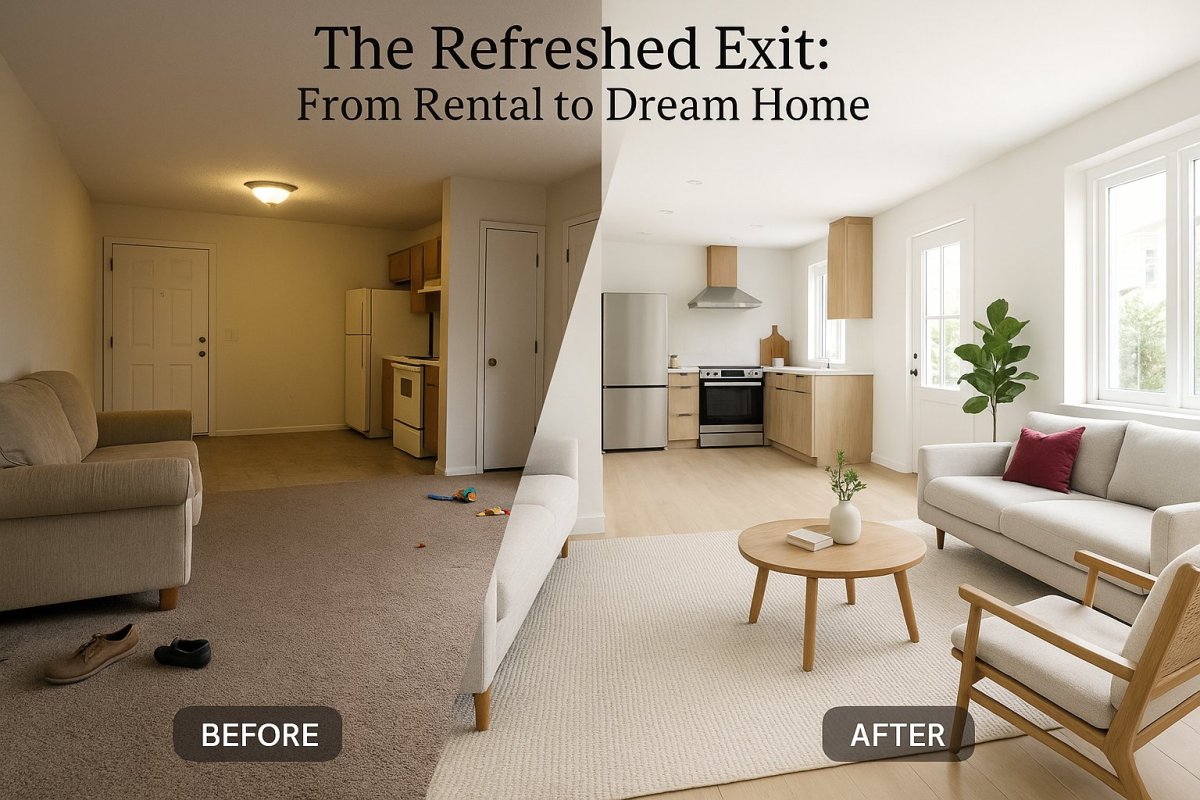
- Invest in Presentation: In a balanced market, condition matters. Professional staging, high-end photography, and minor cosmetic updates (like fresh paint and carpet) can yield a 2x to 3x return on investment.
- Target the Winter Window: Work with an agent who can prepare your home for a late-winter launch to maximize exposure and minimize competition.
For Buyers:
- Get Fully Underwritten, Not Just Pre-Approved: In a competitive situation, having your loan fully underwritten (where a lender has already verified your assets and income) allows you to close faster and present an offer that is nearly as strong as cash.
- Marry the House, Date the Rate: If you find the perfect home in a great neighborhood, do not let a 6.5% interest rate stop you. You can always refinance if rates drop in the future, but you cannot refinance the purchase price of a home you missed out on.
- Look for "Stale" Listings: With inventory normalizing, some homes will sit on the market longer than 30 days. These properties present excellent opportunities to negotiate on price, inspection repairs, or seller-paid rate buy-downs.
Take the Next Step: Your Personalized Micro-Market Review
The 2026 Colorado Housing Market Outlook proves that the Denver real estate market is maturing, offering a more predictable, balanced environment for both sides of the transaction. However, the success of your move depends entirely on the specific dynamics of your neighborhood, your price point, and your unique financial goals.
If you want to know exactly how much equity you have in your home today, or if you want to strategize the perfect timing for your next purchase, let's connect. Contact me directly for a comprehensive, customized micro-market review of your neighborhood.